
R U OK? Day — When Life Gives You Lemons
On 11 September, Psychology Club took part in our school’s R U OK? Day campaign, collaborating with the school wellbeing team under the theme “When Life Gives You Lemons.”
For us, this event was more than simply running a booth. It was one of the first opportunities for Psychology Club to turn our ideas into something that students could actually see, experience, and participate in around campus.
Preparing for the Day
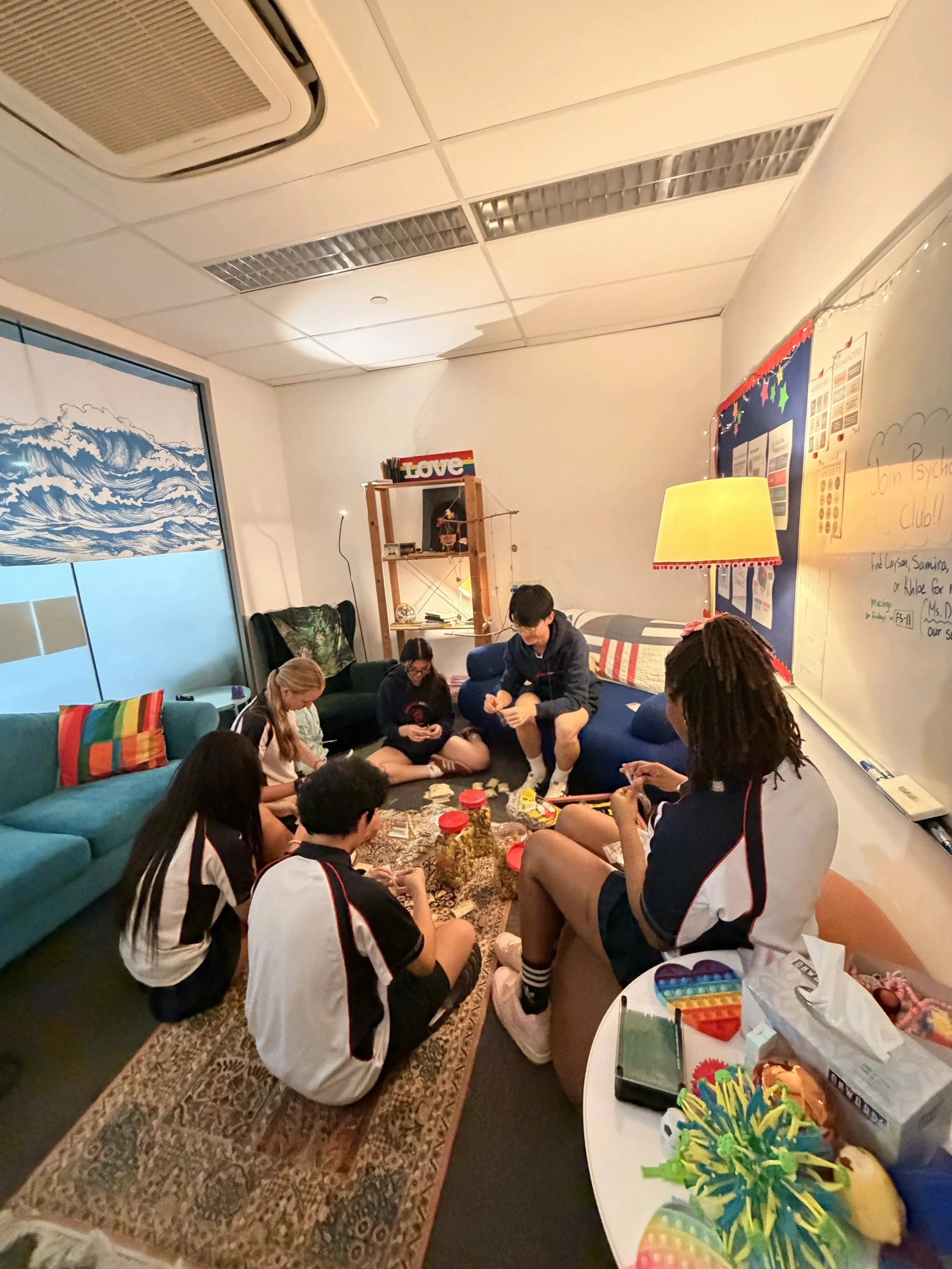
Before the event, we worked on several small elements that could make conversations about wellbeing feel more approachable. Instead of presenting mental health as a heavy or distant topic, we wanted to create an environment that felt warm, simple, and welcoming.
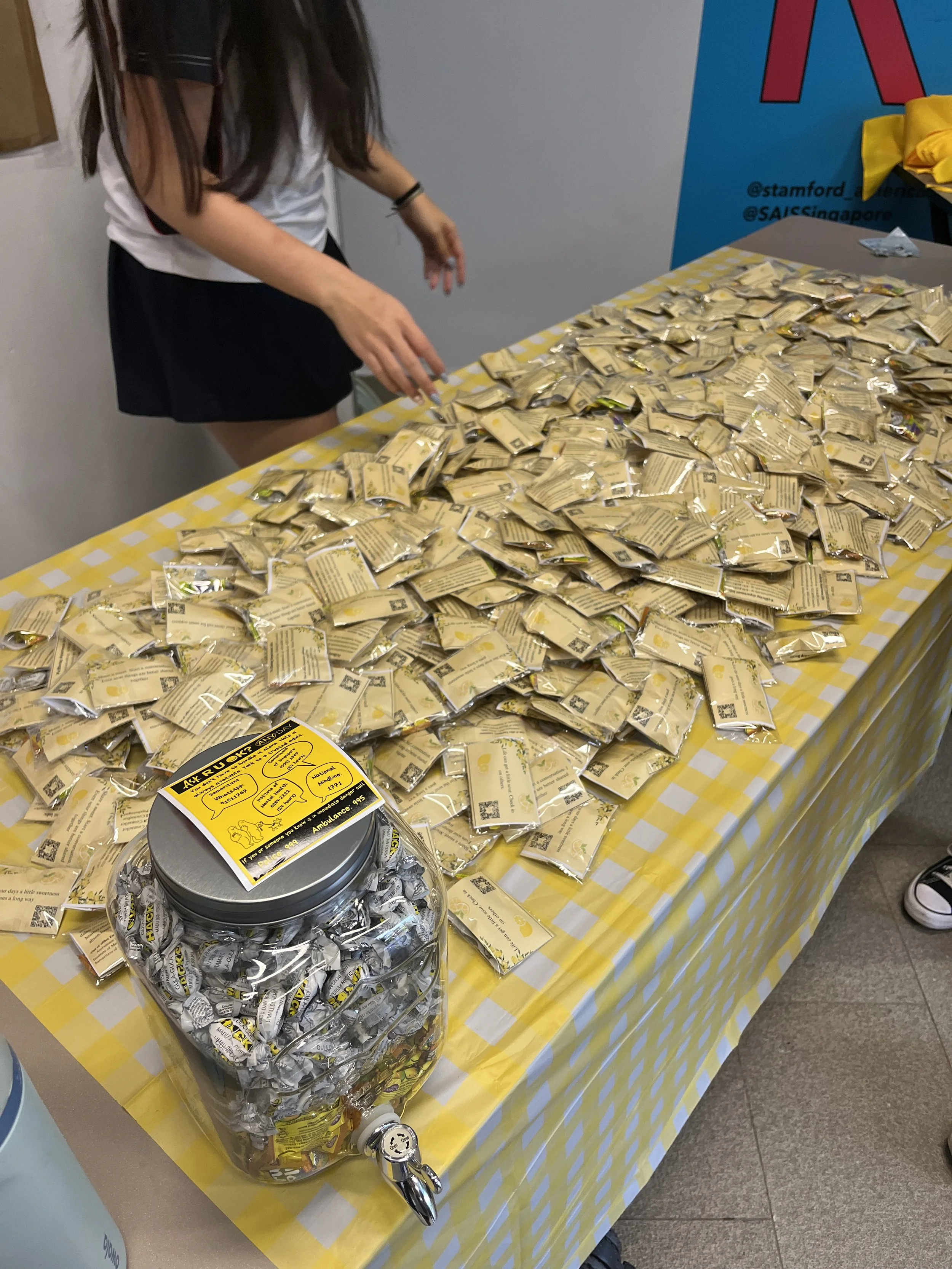
Our booth included lemon-themed treats, positive message cards, posters, and an interactive sticky-note wall. Each part had a slightly different purpose: some were there to attract attention and make people smile, while others encouraged students to pause, reflect.
Even small details required teamwork — preparing materials, organising the booth, discussing how students would interact with it, and making sure our messages were appropriate and respectful.
During the Event
Throughout the day, students stopped by our booth, picked up lemon candies and positive message cards, and engaged with the materials we had prepared for the event.
It was especially meaningful to see how small gestures could contribute to the atmosphere of the day. A simple piece of candy or an encouraging message may seem small, but together they helped make the topic of wellbeing feel more approachable and connected to everyday school life.
The experience reminded us that awareness activities do not always need to be complicated. Sometimes, creating a friendly and welcoming space is already a way of encouraging people to pause, think about wellbeing, and show a little more care for the people around them.
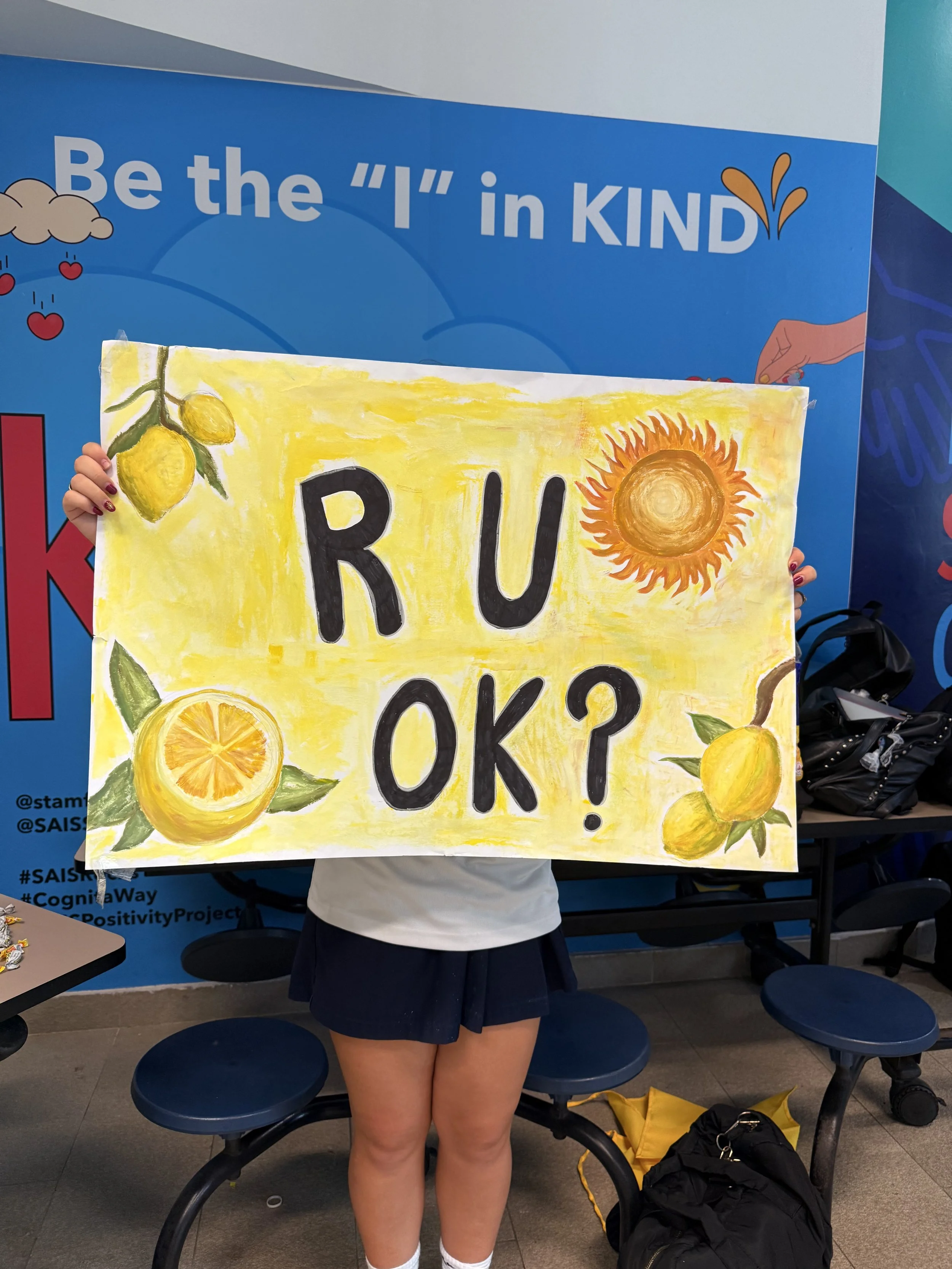
Painted by Maria Jose (Majo) Arce Fabrega
acrylic on paper
Participating members included:
Ziqian (Cayson) Wang , Khloe Syrah Goble, Samira Paige Clarke, Amber Breckenridge, Andrey Bulatov,
Arthur Noah Astadan Castro, Ella Lavid, Larassati Binti (Laras) Sayed, Linlin Li,
Lola Maria Anna Coenraads, Maria Jose (Majo) Arce Fabrega, Rishbha Rawat,
Sarah Ann (Sarah) Hoeden, Tobi Widell, Vivienne Lily Bergevin, Yoonchae Cho, Zaria Briece Leavy
Thank you all!
What We Learned
R U OK? Day helped us understand the difference between learning about psychology and applying it within a real community.
When planning an activity, we had to think not only about what we wanted to communicate, but also about how other students might receive it. Mental health topics require sensitivity, and awareness should never become oversimplification or pressure people into sharing things they are uncomfortable discussing.
We also saw how psychology can connect with creativity, communication, and service. Posters, conversations, small activities, and even the design of a booth can influence whether people feel interested enough to stop and engage.
Most importantly, the experience showed us that impact does not always have to begin with something huge. It can start with one conversation or one person deciding to check in with a friend.